


Table of Contents
- Why Performance Billiards Shirts Need Specific Care
- How to Wash Moisture-Wicking Shirts Without Ruining Fabric
- How to Remove Odor from Athletic Shirts After Long Matches
- How to Dry Polyester Shirts Safely
- How to Care for Custom Printed Shirts and Team Logos
- Fabric-Specific Care for Billiards Shirts
- A Simple Maintenance Schedule for Peak Performance
- Frequently Asked Questions
Last Updated: October 19, 2026
Why Performance Billiards Shirts Need Specific Care
Performance billiards shirts are not ordinary cotton tees. They are built from technical fabrics, usually polyester blends, engineered to move sweat away from your skin and keep you cool through long matches. That engineering is exactly why they need different care.
Treat a moisture-wicking shirt like a cotton t-shirt and you shorten its life. Hot water, fabric softener, and high heat all attack the very fibers that make the fabric work. At Savage Billiards, we build our polos from performance polyester jersey and double-knit fabrics designed for durability and comfort. Here is how to keep yours performing for years.

How to Wash Moisture-Wicking Shirts Without Ruining Fabric
Wash moisture-wicking shirts in cold water on a gentle cycle, inside out, with a small amount of mild detergent. Skip the fabric softener and the dryer sheets. That simple routine protects the fabric and keeps sweat moving away from your body.
Follow these steps:
- Turn the shirt inside out to protect the outer surface and any graphics.
- Use cold water, never hot. Heat can damage stretch fibers.
- Add a small amount of mild, liquid detergent.
- Choose a gentle or normal cycle with a low-spin finish.
- Wash with similar performance fabrics, not heavy towels or jeans.
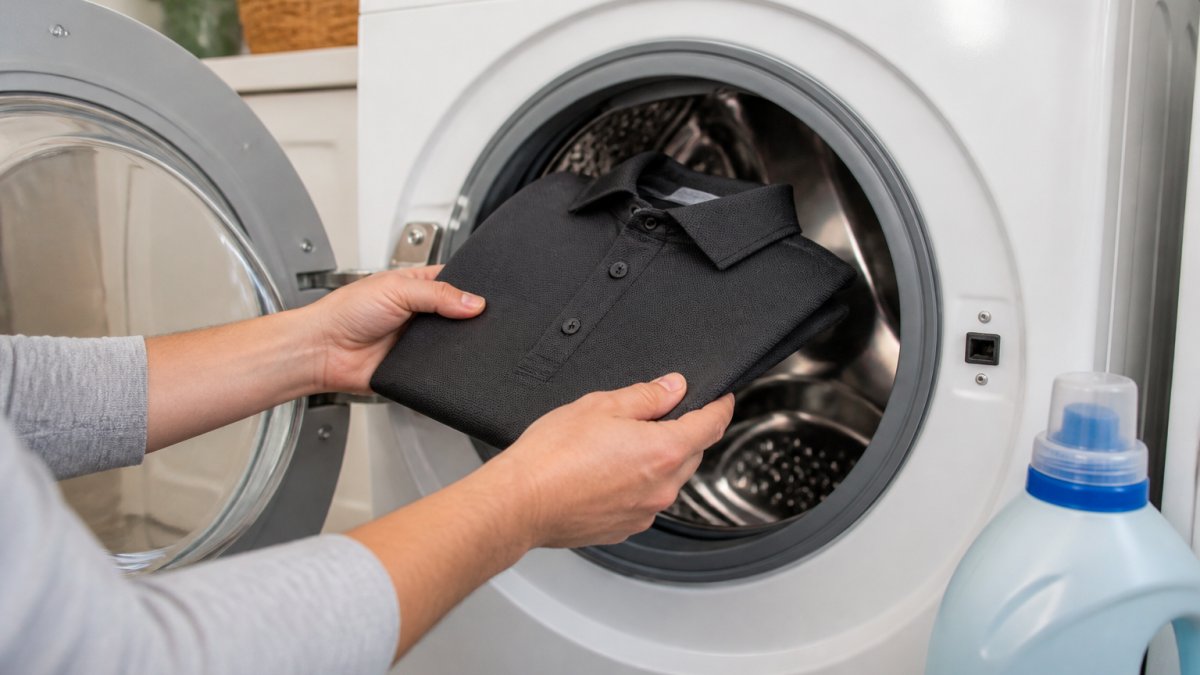
A common mistake is overloading the machine. Crowded drums trap dirt and reduce rinse efficiency. Wash small loads and let the fabric move freely.
How to Remove Odor from Athletic Shirts After Long Matches
Remove odor from athletic shirts by washing them promptly and letting them air dry fully between wears. For stubborn smells, soak the shirt in a mix of cold water and a small amount of white vinegar before a normal wash.
Polyester traps body oils, and those oils hold odor. A few habits keep smells from setting in:
- Wash within a day of wearing, not a week later.
- Air the shirt out after a match instead of balling it up in a bag.
- Pre-soak smelly shirts in cold water with a splash of vinegar.
- Use a sports-specific detergent if odor keeps returning.
- Never store damp shirts in a closed bag or drawer.
If one spot smells stubborn, make a paste of mild soap and water, work it into the underarm area, and let it sit for a few minutes before washing. Mild soap and a damp cloth also handle most fresh marks between washes.
How to Dry Polyester Shirts Safely
Dry polyester shirts on low heat or hang them to air dry. High heat is the fastest way to shrink, warp, or damage performance fabric. Air drying in the shade is the safest option of all.
Here is the routine we recommend:
- Shake the shirt out to remove wrinkles right after washing.
- Hang it on a hanger or lay it flat in a shaded, ventilated spot.
- If you use a dryer, choose the lowest heat setting.
- Remove the shirt while it is still slightly damp to avoid overdrying.
- Never iron directly on graphics or logos.
Direct sunlight fades colors over time, so shade is your friend. A little patience here protects both the fit and the finish.
How to Care for Custom Printed Shirts and Team Logos
Care for custom printed shirts and team logos by washing inside out in cold water and avoiding harsh heat on the decorated areas. Heat and abrasion are what wear out prints and embroidery fastest.
Custom graphics need a gentler touch:
- Turn the shirt inside out before washing to shield the logo.
- Skip the bleach and any harsh stain removers on printed areas.
- Avoid ironing over prints or embroidery. If you must press, use low heat and a cloth barrier.
- Hang dry printed shirts whenever possible.
- Check the logo after each wash for lifting or cracking.
Our free customization, including names, numbers, and team branding, ensures a personalized look. A little care on wash day keeps that team logo sharp.
Women's Heathered Embroidered Polo →
Fabric-Specific Care for Billiards Shirts
Match your care to the fabric. A 100% polyester performance polo and a heathered jersey blend both want cold water and low heat, but each has its own quirks.
Here is a quick reference with the mechanism behind each precaution:
| Fabric Type | Wash Temp | Dry Method | Key Precaution | Why It Matters |
|---|---|---|---|---|
| 100% polyester double knit | Cold | Low heat or hang | No fabric softener | Softener coats the fiber and blocks capillary wicking; double knit is dense, so residue sits on the surface |
| Heathered polyester jersey | Cold | Hang dry | Avoid high heat | Heathered yarns are spun from mixed-tone fibers; high heat can cause uneven shrinkage and dull the heathered look |
| Printed or embroidered areas | Cold, inside out | Air dry | No direct ironing | Heat softens plastisol inks and embroidery threads; direct ironing can melt or flatten the decoration |
| Silk-touch performance blends | Cold, gentle | Low heat | Skip bleach | Silk-touch finishes are surface treatments; bleach and high heat strip the finish and leave the fabric rough |
| Cotton or cotton-blend practice shirts | Cold | Low heat or hang | Expect some shrinkage | Cotton fibers swell in hot water and contract on drying; cold water and low heat limit shrinkage to a small amount |
A few fabric-specific habits make the difference:
- Polyester double knit: Turn inside out and use a mesh bag if the shirt has embroidery. Double knit is durable but can snag on zippers or hooks in a mixed load.
- Heathered jersey: Wash separately from dark denim or new dark shirts for the first few washes; heathered yarns can pick up lint and dye transfer more readily than flat polyester.
- Stretch blends: If the shirt contains elastane, avoid chlorine bleach entirely. Chlorine degrades elastane fibers and leaves the shirt permanently limp.
- Printed graphics:
- Embroidery: Check the back of the embroidery after each wash for loose threads. Trim loose threads with sharp scissors rather than pulling them, which can unravel the design.
Our Men's Performance Polo uses a 4-ounce polyester double knit with PosiCharge technology that holds color for a professional look that lasts. The Women's Heathered Embroidered Polo is a lightweight 3.8-ounce polyester jersey built to stay breathable. Both reward the same simple care: cold wash, low heat, no softener. The difference is in the details: the double knit tolerates a low-heat dryer better, while the heathered jersey is safer hung dry to preserve its tonal look.

A Simple Maintenance Schedule for Peak Performance
Keep a simple maintenance schedule to protect your billiards shirts all season. Wash after each wear, inspect for wear monthly, and refresh odor-prone shirts with a vinegar soak as needed. The schedule below adds specific inspection points and performance checks so you know when a shirt is still working and when it is time to replace it.
Here is a schedule that works:
- After every match: Air the shirt out, then wash within a day. Hang it rather than balling it up in a bag; trapped moisture and body oils are what set in odor.
- Weekly: Check seams, cuffs, and logos for early wear. Look specifically at the underarm seams and the collar edge, which take the most stress. Run a finger along the seam; if you feel loose threads or see gaps, repair or retire the shirt before it fails mid-match.
- Monthly: Do a vinegar soak on shirts that see heavy use. Mix roughly one part white vinegar to four parts cold water, soak for 30 minutes, then wash normally. This helps strip accumulated body oils that regular detergent leaves behind.
- Each season: Review fit and fabric feel, and retire shirts that have lost stretch or breathability. Two concrete checks: stretch a small section of the fabric and release it; if it does not snap back, the elastane is fatigued. Then hold the shirt up to a light source; if light passes through unevenly or the fabric feels stiff and slick, the wicking channels are likely clogged with softener or detergent residue.
- Always: Store clean, dry shirts on hangers or folded flat. Avoid wire hangers, which can stretch shoulder seams over time; use broad plastic or wooden hangers instead.
A few performance checks go beyond the calendar:
- Moisture test: After a wash and dry, drip a small amount of water on the inside of the fabric. If it beads and rolls off instead of spreading and absorbing, the wicking performance has been compromised, usually by softener or dryer sheets.
- Odor test: If a shirt still smells faintly after a normal wash and air dry, the odor has set into the fibers. Try the vinegar soak once; if the smell returns after the next wear, the shirt is a candidate for replacement.
- Fit check: Compare the shoulder seam position to when the shirt was new. If the seam has crept outward or the sleeve hem has stretched, the fabric has lost recovery and the shirt will fit loosely during play.
- Logo check: Look for cracking, lifting edges, or fading on printed logos and embroidery. Small lifts can sometimes be pressed flat with a cloth barrier and low heat, but cracked prints cannot be restored.
A damp cloth and mild soap handle small marks between washes. For deeper cleaning, follow the fabric-specific steps above. For general guidance on caring for synthetic performance fabrics, the American Cleaning Institute fabric care guidance is a solid reference, and the FTC care label guidelines explain what those little tags on your shirt actually mean.
Frequently Asked Questions
Are performance billiards shirts Dri-FIT?
Dri-FIT is a trademarked fabric technology owned by a specific sportswear brand, so other manufacturers cannot technically label their shirts as Dri-FIT. However, performance billiards shirts are made from polyester blends designed to wick moisture away from the skin, just like Dri-FIT fabrics. Look for terms like moisture-wicking, breathable, and polyester jersey on the label. Savage Billiards polos use 100% polyester jersey or double knit, which pulls sweat away from your body and dries quickly during tournament play.
Can you put a billiards performance shirt in the dryer?
You can tumble dry performance billiards shirts on low heat, but air drying is safer for the long term. High heat can damage the polyester fibers, reduce moisture-wicking ability, and cause custom prints or embroidery to crack or fade. If you use a dryer, choose the lowest heat setting and remove the shirt while it is still slightly damp, then hang it to finish drying. Never use dryer sheets, as they coat the fabric and block moisture transfer.
Can fabric softener damage moisture-wicking shirts?
Yes, fabric softener and dryer sheets leave a waxy residue on polyester fibers that clogs the tiny channels responsible for moving sweat away from your skin. Over time, this residue reduces the shirt's ability to wick moisture and can trap odor. Skip softener entirely when washing how to wash moisture-wicking shirts, and use a sport-specific detergent instead. If you want softer fabric, choose a detergent formulated for technical fabrics rather than a traditional softener.
How do you keep a custom billiards shirt's logo and print from fading?
Turn the shirt inside out before washing to protect the printed or embroidered area from friction. Use cold water and a gentle cycle, and avoid bleach or harsh stain removers on the logo. When drying, air dry the shirt flat or hang it away from direct sunlight, which can fade colors over time. For embroidered logos, avoid ironing directly over the stitching. Following these steps for how to care for custom printed shirts helps keep team names, numbers, and logos sharp.
Long matches and hot leagues put real stress on your gear. When your shirts are ready to be replaced, Savage Billiards offers performance polos built for durability and comfort, with free customization for names, numbers, and team branding. Shop our moisture-wicking polos, including the Men's Performance Polo and Women's Heathered Embroidered Polo, and keep your team looking sharp all season. Get started with Savage Billiards and gear up for peak performance.


